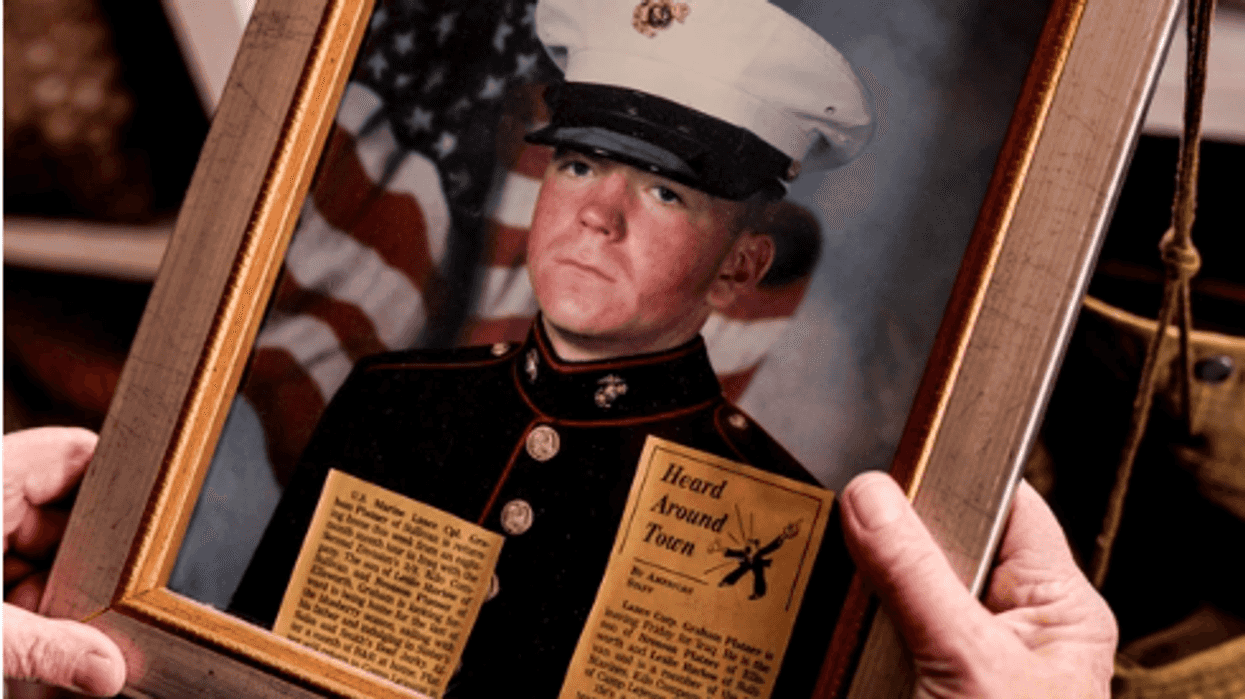
All of a sudden, during a single week in early June, a Marine sergeant turned oyster farmer named Graham Cunningham Platner, Democratic candidate for the Senate in Maine, became the most famous veteran in America. Or, if you prefer, the most infamous.
Vets running for elected office have always occupied a special place in the hearts and minds of American voters of both parties. An October 2025 Gallup poll found that 80 percent of American voters have a strong belief in their leadership skills. Respected for the core values of honor, patriotism, and sacrifice, they benefit from a built-in credibility that civilian politicians have to work much harder to earn. “Fighting Dems” were critical to the Blue Wave in the 2018 midterms, above all in Republican-held swing districts and including Maine’s rural 2nd district, which was won by centrist Democrat Jared Golden, a Marine who served in Afghanistan and Iraq. In 2022, a new crop of Republican vets – several of them MAGA-aligned members of elite units like the Navy SEALs [see G. Black, The Enemy Within and Burn and Rave at the Close of Day, The Washington Spectator, 2022] – were arguably the single most important reason Republicans flipped the House, winning a razor-thin five-seat majority.
Veterans may now be poised to play a similarly important role in the 2026 midterms. Seven of the 14 most vulnerable Republican-held seats are occupied by veterans, and a new generation of younger Democratic and independent vets, both centrist and progressive and including several women combat veterans, are contesting key seats in both the House and the Senate. Especially in districts with large military and veteran populations, their concerns may be more important than ever in this cycle, with a number of burning questions high on the agenda: budgetary threats to VA facilities and services; the disproportionate impact on veterans of layoffs of federal employees in the early months of the Trump administration; Trump’s disastrous war of choice in Iran; the politicization of the military and the ideological purge of more than two dozen flag officers by self-styled Secretary of War Pete Hegseth; and the administration’s attacks on Sens Mark Kelly of Arizona and Elissa Slotkin of Michigan, Rep. Jason Crow of Colorado, and three other members of Congress when they reminded military personnel that they are not obliged to follow illegal orders.
When Maine Democrats voted in their recent primary on June 9, Graham Platner stood accused, largely as the result of a lengthy story in the New York Times by political reporters Lisa Lerer and Katie Glueck, of misogyny, abuse of former girlfriends, and sexting other women while married. It had also been suggested he harbored secret Nazi sympathies because of a tattoo he got almost 20 years ago during his military service, said to resemble the Totenkopf or Death’s Head symbol used by Hitler’s SS. The story dropped just five days before the primary and was quickly followed by a slew of opinion pieces in major media like the Times and the Atlantic denouncing Platner and berating the Democratic Party for tolerating his candidacy.
Others picked up on offensive comments Platner had made in a trove of more than 2,000 Reddit posts, written between 2009 and 2021, then deleted, and subsequently unearthed and entered into a searchable database by the Maine Monitor, a project of the independent Maine Center for Public Interest Reporting.
To be sure, there’s plenty in Platner’s Reddit posts to cause offense. A number of these comments have been widely reported – about African Americans (they “don’t tip”), rural Mainers (“racist and stupid”), and victims of sexual assault (they should “take some responsibility for themselves” by not getting drunk). The posts are also strewn with profanities, although that’s not exactly disqualifying for politicians. Lyndon Johnson and Richard Nixon may have set the gold standard, but Vice President JD Vance, a devout recent convert to Catholicism, admitted to The Atlantic earlier this month that he “curses like a sailor,” and President Trump is famous for his F-bombs (hurling several most recently in the direction of Benjamin Netanyahu).
More to the point, however, is that Platner’s language would not surprise anyone familiar with combat Marines, and it’s his four years of service, including multiple tours in Iraq and Afghanistan and followed by years of untreated post-traumatic stress disorder (PTSD), that form a defining core of his life experience. Yet despite the fact that fully 60 percent of those 2,000-plus Reddit posts are about the military, there’s no indication that these were explored by any of the journalists or opinion writers who delved into Platner’s life and beliefs.
A larger question, of course, is how many Americans – especially the reporters who covered the Platner flap and the inside-the-Beltway pundits who added their own ten cents – are actually familiar with the reality of combat Marines, or even, in this post-Vietnam age of an all-volunteer military, about military matters in general. The New York Times investigation simply calls Platner “a combat veteran,” as if that tells us everything we need to know. In other coverage, at best we get the additional phrase “who served in Iraq and Afghanistan.” At worst, we get “former Marine” or “ex-Marine.” (Try using those phrases around a Marine. In the motto of the Marine Corps, Semper Fi, the Latin word semper means always – and they take that credo seriously.)
So what does the phrase “combat Marine” mean in Platner’s case, and how might it provide the necessary context for understanding his turbulent life in the 15 years since he left the service, dogged by a severe case of PTSD that was left unacknowledged and untreated for a decade?. It was toward the end of that period, while living in Washington, D.C. and studying history at George Washington University under the GI Bill, before dropping out to deal belatedly with his PTSD, that he dated a woman named Lyndsey Fifield, the main source for the New York Times story.
Scars That Don’t Fade
The military is a world of status-sensitive hierarchies. For a combat vet, the lowest rung of the ladder is occupied by the administrators, support, transportation, and logistical staff, intelligence analysts and assorted other deskbound workers. In Vietnam, where only about 20 percent of the 2.7 million Americans who served actually saw combat, these were known as REMF’s – Rear-Echelon Motherfuckers. Platner and other combat Marines, patronizingly or derisively, call them POG’s – pronounced pogues – short for Person Other than Grunt.
The inter- and intra-service hierarchies are also fiercely competitive, and they’re not just about rank. Marines, for example, often have a deep and abiding sense of superiority over Army troops. Within the Marines, too, there’s an internal pecking order, and not all combat Marines are created equal. In Vietnam, where they sustained twice as many fatalities per capita as Army troops, those who laid greatest claim to valor and hardship were those who fought on the most lethal battlefields – on the edge of the DMZ, or in the terrifying A Shau Valley, or along the border with Laos and the Ho Chi Minh Trail, or, worst of all, in the brutal 33-day siege of Hue during the 1968 Tet Offensive. In Marine lore, as well as in official histories, Hue took its place along with Iwo Jima as the most traumatic encounters in the storied 250-year-long history of the Corps. After 2006, a third name was added to that list: Ramadi, capital of Al Anbar province and the epicenter of the insurgency by Al Qaeda in Iraq (later rebranded as ISIS). And that is where Graham Platner served.
Even though he’d protested George W. Bush’s misbegotten decision to go to war in 2003, Platner had been fascinated by the military since childhood, and he enlisted in the Marines on March 1 of the following year. He was 19. Like many kids, he said, he wanted the kind of experience shown in Stanley Kubrick’s depiction of Marines in the battle of Hue, Full Metal Jacket. He deployed for the first time to Iraq that November and took part in the second battle of Fallujah – a place burned into the consciousness of Americans by that time by the gruesome photographs of two bodies of U.S. military contractors, employed by Blackwater USA, strung up, burned and mutilated, on a bridge over the Euphrates River. Fallujah was an unforgiving place, eventually recaptured by a joint force of Marines and Army, supported by Navy units, just before Christmas after weeks of house-to-house combat to dislodge 3,000 heavily entrenched insurgents who had occupied the city. But Ramadi was even worse.
Platner remained in Fallujah through the following summer before being deployed to Ramadi in March 2006. Serving in both Fallujah and Ramadi was a rarity, I was told by Lt. Col. Neal Rickner, a Marine veteran whose unit served in Ramadi before being relieved by Platner’s. Six months was also an unusually short period of leave between two combat deployments, he added; the norm was closer to 10-14 months.
The six-month interlude was a period marked, by Platner’s own admission, by constant heavy drinking. In Ramadi, he was a machine-gun section leader with the Fourth Platoon of Kilo Company of the Third Battalion, Eighth Marines, based in the city’s Government Center, although the phrase by this time was a dark joke among the grunts, since there wasn’t much of a government or much of a center. The governor himself had been killed in 2005, and his successor barely survived a suicide car bombing just weeks after Platner arrived. The place was “a death magnet,” Rickner recalled.
The journalist Dexter Filkins embedded with the Marines in Ramadi. In his celebrated book, The Forever Wars, the title of his chapter on their experiences there is “Fuck Us,” variants of the phrase being scrawled all over the walls of the wrecked Government Center where they were holed up for months.
“The cityscape,” Filkins wrote, “was obliterated for a mile in each direction.” It was “a total ruin, like Grozny or Dresden.” If a Marine patrol left the Government Center, the average time before contact with the enemy was eight minutes. By the end of April, Platner wrote in one Reddit post, the Marines had sustained so many casualties that they had “ceased all daylight patrolling.” Instead, the 75 men of Kilo Company hunkered down where they were.
The grunts slept eight to a room, sweltering in temperatures above 100 degrees, killing time by blasting heavy metal music and pumping iron. Most of the windows were boarded up after being blown out. There were no working toilets, and no portable ones either, because those would have made easy targets for insurgent snipers. So the Marines defecated in plastic bags filled with chemicals and then burned them. There were no showers. The place stank.
“The worst eight months of my life,” Platner wrote on Reddit. He spent them “slogging through heat, killing, and misery, and it was very obvious to us on the ground there was no point to what we were doing.” Returning to the Government Center one day in April 2006, he learned that a Marine truck had been hit. How many were dead? he asked his platoon commander. “All of them,” the officer said. Platner had to deliver the news to the members of his team, but when he reached the words “all of them,” he couldn’t hold back the tears.
On the tenth anniversary of that event, Platner posted a lengthy eulogy for some of the ten men on Reddit. “It’s easy for today to be dark, to be sucked into the trap of loss, regret, depression, and anger,” he wrote. “It’s easy to drown it in liquor.” Instead, he found solace in remembering the dead, “men who chose to enter a profession of crushingly hard work, sacrifice, and danger all for the simple purpose of protecting the men around them.”
There was Staff Sergeant Eric McIntosh, “the epitome of the fighting Marine, a stud who exuded proficiency and professionalism while also being humorous and approachable.”
Corporal Scott Procopio, “with his booming laugh and absurd Boston accent,” was “without doubt one of the finest men I have ever had the fortune of meeting, a beast of a Marine who drove all the men around him with his enthusiasm and good nature.”
Lance Corporal Kun Young Kim “had a quiet reliability about him. Unlike the usual loud gregariousness that people tend to associate with grunts, he was low key and dependable, and for some reason I can still see the way a smile would creep over his face when stupid shit was going on and he’d laugh in a way that made it seem like he was seeing a deeper joke that you didn’t get yet.”
Doc Padilla, new to the company, was a Navy Corpsman – a medic attached to the Marines. Platner didn’t know him well, but you didn’t need to, he wrote, because corpsmen in general were held in such high esteem. “These young men volunteered for one specific duty,” he wrote. “To save the lives of their Marines in combat. A more honorable calling is hard to find.”
Another period of leave followed, and it was at this point that the incident occurred that has led to the explosive charge that for many years Platner had sported a Nazi tattoo, a symbol of the insignia used by both the SS-Totenkopfverbände, a branch of the Nazi Party’s paramilitary Schutzstaffel organization responsible for guarding the concentration and extermination camps, and the notorious 3rd Panzer Division of the Waffen SS as well. But again, context and detail are all-important here, and as with Platner’s Reddit posts on military issues I could find no discussion of this in press coverage of the episode.
In 2007, shortly after shipping out from Iraq, Platner and a group of fellow Marines took a spell of leave in Croatia, which was becoming a popular destination for tourists and stag parties. They spent much of the time roaring drunk – not exactly abnormal behavior for combat Marines fresh from the battlefield. In the town of Split, they went to a tattoo parlor, where one of the designs on offer was “a terrifying-looking skull and crossbones.” This too was hardly unusual. “It’s not much of an exaggeration to say that as many combat Marines had skull and crossbones tattoos as those who didn’t,” Lt. Col. Rickner pointed out. “Often when we patrolled in Ramadi, Marines would paint their faces to look like skulls. It was just part of getting amped to face the enemy.”
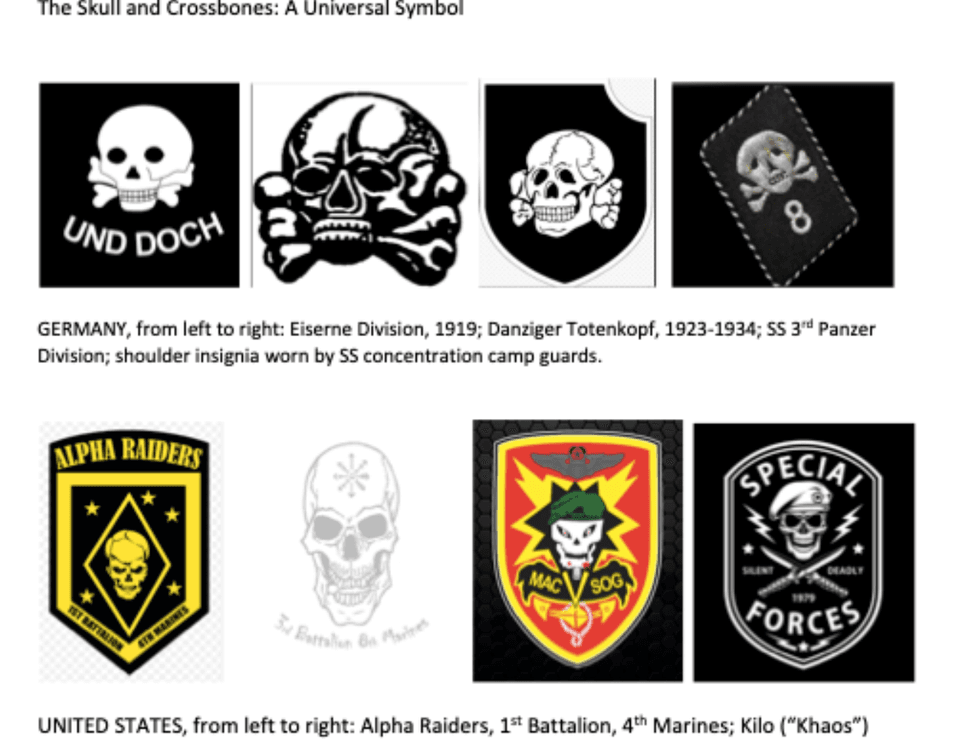
The death’s head – Totenkopf in German – is an ancient symbol, dating back centuries and used by militaries around the world. It comes in endless variants. Sometimes the bones are replaced by crossed swords or crossed rifles or machine guns. But to soldiers throughout history, they symbolize mortality, valor, and sacrifice.
Platner and his buddies got the tattoo, he wrote, “because we were Marines and skulls and crossbones are [a] pretty standard military thing.” Many Marine units have favored death’s head designs in their insignia. These include Marine Amphibious Reconnaissance, Special Operations Command, the “Alpha Raiders” of the 1st Battalion, 4th Marines, 1/7 Marines with their “Suicide Charley” motif, and the legendary “Khaos Company” – a nickname for Platner’s own Kilo Company – of the 3/8 Marines. It is also featured on the guidon of the Marine Mortuary Affairs unit that served in Fallujah and was charged, among other things, with ensuring that the remains of dead Iraqis were buried in strict accordance with Islamic tradition.

The skull and crossbones has a long history in the German military, dating back to the Prussian Hussars of the 1740s and with a number of different designs. In the blurry video that Platner released to the media in October 2025, showing him dancing shirtless at a relative’s wedding, it does indeed appear that the murky, square-shaped blob on the right side of his chest roughly resembles one of the particular variants adopted by the SS, which used at least four different designs, leading to the charge that Platner was a closet Nazi. But again, the devil is in the details. This square version of the Totenkopf symbol was first used by the Eiserne Division, a volunteer Freikorps unit that fought in the Baltics immediately after World War I; after that there was the Prussian Danziger Totenkopf, used from 1923-1934 (the SS was not created until 1933); and then, during World War II, the Kampfgeschwader (Battle Wing) 54 of the Luftwaffe.
None of this is to justify Platner’s tattoo or to deny its symbolism – Marines will be the first to admit that they do a lot of “dumb shit” when they’re on leave and partying. The point is to put it in context and ask whether he knew what it was, either at the time or later. A fellow Marine who was with him that day, Phil Proschko, told Zeteo, an online platform, that it was “something to commemorate what happened, all the people we lost in our unit in Ramadi.”
Walk into any tattoo parlor near a Marine base – Camp Pendleton, Quantico, Camp Lejeune, Parris Island – and some form of the death’s head will be a common request. But a Marine base in the United States in 2026 is not Croatia in 2007, and it’s no surprise that one of the designs offered there would have been the German-style Totenkopf.
The wars in the former Yugoslavia had been over for just six years at that time, and Croatia was still wrestling with the dark legacy of the past – not just the recent atrocities committed by Croatian troops against Serbian civilians, but above all the virulent Fascist Ustashe movement, which ruled the Nazi puppet Independent State of Croatia (NDH), aiming to create a racially pure society, massacring or consigning to the death camps hundreds of thousands of Serbs, Jews, and Roma. During the wars of 1991-2001, Croatian forces adopted Ustashe symbols, including the twin lightning-bolt runes associated with the SS, and post-war governments downplayed or denied Ustashe war crimes, promoting the revisionist view that the movement should not be seen as fascist but as the expression of a noble cause, Croatia’s historical yearning for independence.
The Making of a Media Narrative
There’s no grainy videotape, of course, of exactly what happened when Platner and his buddies visited that tattoo parlor in Split. Whether he knew of the significance of his tattoo is largely a he-said/she-said story – the assertion of his former girlfriend Lyndsey Fifield vs. his own vehement denial.
Platner’s relationship with Fifield ended in 2015, and that September she embarked on a seven-year stint as social media manager for the far-right Heritage Foundation. A decade later, after the June 4 New York Times story broke, she told the Jewish Telegraphic Agency that, “I’ve been a vocal Zionist since college. I’ve been a proud conservative since then as well. Both of those things were true when I dated Graham.”
Back in 2016, soon after they broke up, she was included in the “30 Under 30” list produced by a conservative news outlet called Red Alert Politics (which later merged with The Washington Examiner), where she was quoted saying that she wanted “to emulate the late conservative blogger Andrew Breitbart’s approach to online activism.” (In the flurry of media coverage that followed publication of the New York Times story on June 4, Breitbart was especially energetic, publishing no fewer than 36 pieces on Platner in the following two weeks and dubbing the Democrats “the Nazi tattoo party.”)
Fifield’s political affiliations do not, of course, mean that her account of his behavior during their relationship, which he has also denied, should be discounted. For their Times investigation, Lerer and Glueck interviewed six of Platner’s exes, and Fifield’s account makes up more than 80 percent of the column inches devoted to their recollections. Maine Democrat Jenny Racicot, who dated him from 2019-2021, gets three sentences, saying that “he did not respect women.” A third, who preferred to remain anonymous, said that she “felt like collateral damage to the world that was his.” All three spoke of his heavy drinking and womanizing. Overall, however, it was a mixed picture. Two of the other three described him as “a great boyfriend… super kind, very nice, fun,” and as “responsible, intelligent, and supportive.” The third said that “she felt really safe with him.”
Platner’s affair with Fifield seems to have been an intense and volatile one. “Lyndsey, I love you in a way I can’t even describe,” he wrote to her in 2016, after it was over. “You are literally everything to me.” When the Times interviewed Fifield, she cited three examples of abusive behavior, which often occurred when they’d both been drinking. Although he had never hit her, he’d grabbed her by the shoulder, sometimes hard enough to leave marks. Once he’d yanked her out of a taxi by the wrist. On another occasion he’d twisted her arm and shoved her into another room, “telling her to remain there until she was ‘calm.’”
The New York Times was unable to corroborate any of these details and found no other former girlfriend who reported abusive behavior. The incidents described by Fifield don’t paint a pleasant picture of Platner’s conduct during the years he admits to self-medicating with alcohol. Yet “intimate partner violence,” or IPV, is sadly a common occurrence among veteran couples, and combat trauma and PTSD may help to explain this behavior without condoning it. A 2025 Yale School of Medicine study found that 51 percent of these couples have experienced IPV.
But the story as reported also raises deeper questions. After the issue of the tattoo first surfaced last October, and Platner released the video of his bare-chested wedding dance, the first mention of it in the media was by someone identified only as “a person who socialized with Platner when he was living in Washington, DC, more than a decade ago,” who told Jewish Insider magazine that he had “bragged about the tattoo, which he called ‘my Totenkopf.’”
The sequence of events here is important for a clear understanding of the story. On June 4, the day the New York Times story was published, a post on X by a Lahav Harkov said, “I met @lyndseyfield through Bethany and we have been friends for years, meeting up when I’m in DC. I learned months ago that she was had [sic] dated Platner and had told journalists about the Nazi tattoo.”
“Bethany” is Bethany Mandel, who had once co-hosted a podcast with Fifield, LadyBrains, and is now a columnist for the New York Post. She responded to Harkov’s tweet, “She came forward with the tottenkompf [sic] many months ago, naïvely believing that a Nazi tattoo would be disqualifying.”
Harkov, previously the diplomatic correspondent for the Jerusalem Post, is the senior political correspondent for Jewish Insider.
Immediately after the original Jewish Insider piece came out, the far-right Washington Free Beacon reported a comment from a Platner campaign aide who had just resigned, two months after he announced his run for the Senate, that he must have known about the tattoo’s significance since he was “a history buff.” After that, the issue lay dormant for several months.
When Potent Symbols And Political Sympathies Diverge
In their Times story, Lerer and Glueck asserted that the Totenkopf motif “is widely recognized as a Nazi symbol.” Among those knowledgeable about World War II, and especially among watchdog groups tracking political extremism, like the Anti-Defamation League, that is undoubtedly true. Whether the same is true of the general public or even the U.S. government is debatable. Before returning to Afghanistan for a year’s service as a security contractor for the State Department, Platner, like any applicant, underwent rigorous vetting and visual inspection for any trace of hate symbols and extremist affiliations, and his application was approved.
Fifield’s statement that she was unaware of the meaning of the tattoo until Platner told her about it, calling it “my Totenkopf,” also suggests that its significance is not widely recognized, even by someone who identifies strongly with Zionism, as well as raising the question of why she would remain in such a toxic relationship once she’d learned what it meant. Furthermore, several members of Platner’s extended family are Jewish, including his stepbrother, Seth Frantzman, a senior Middle East correspondent and security analyst for the Jerusalem Post, and Platner’s shirtless dance in the wedding video was filmed as he was serenading his Jewish sister-in-law.
There’s no indication that any family member ever voiced concerns about the tattoo, either then or at any time since he got it in Croatia 19 years ago. And while his former staffer referred to him as a “history buff,” the extensive historical readings Platner alludes to in his Reddit posts are confined to books describing the realities of combat, from the Civil War and World War I to Korea and Vietnam. and its effects on those who fight. Other than a post on combat Marines at Iwo Jima, there is scarcely a reference to World War II other than a comment on the different variants of fascism practiced by Hitler, Mussolini, and Spanish dictator Francisco Franco.
You can’t prove a negative, of course. But if Platner ever harbored extreme right-wing sympathies, the obvious place to look for corroborating evidence would be in his voluminous, unfiltered collection of thousands of Reddit posts. But reading through his 1,190 comments on military matters, as I did, there’s no indication of Nazi or right-wing sympathies – quite the opposite, in fact – with the possible exception of his enthusiasm for weapons, which would endear him to plenty of Trump voters (as well as a good number of Democrats) in the small towns and North Woods of rural Maine.
The posts, especially those written in the five years after he broke up with Fifield and engaged seriously with his PTSD, make absorbing reading. They form a distinct narrative arc of pain and self-discovery, a story of combat and trauma and at least partial redemption. Ending four years before he announced his run for the Senate, they are alternately angry, bitter, thoughtful, sorrowful, and moving – like those tributes to the Marines who died when their truck was bombed in Ramadi. He writes repeatedly of his pride in his service in Iraq and Afghanistan, the comradeship, the technical skills and insights it allowed him to master. He expresses love for the Afghan people and tears into another Reddit user for spreading “full on Islamophobic propaganda.” He votes for Bernie Sanders in 2020 and enjoys reading The Intercept, a left-wing magazine. He rails against the “disgusting” treatment during the Red Scare of the 1950s of those who showed “combat valor against the forces of Fascism” during the Spanish Civil War.
He deplores the conduct of the Navy SEALs (“the super-cool dudes”), who come and go from the Government Center in Ramadi and would “shoot civilians for fun.” They “all had the punisher skull spray painted on their armor,” he writes, referring to a symbol from Marvel’s Daredevil comics. It “reeks of fascism…. most of the real professionals loathed that stuff.” He also notes that “almost every HOG [Hunter of Gunmen, i.e. member of a Scout/Sniper platoon] I knew between 2004-2012” – including Black and Latino Marines – had a tattoo of SS-style twin lightning bolts. “Although I do understand that our world is very foreign and insulated,” he added in the same thread, “most normal people really have no idea how it works.”
He urges fellow veterans to make sure they get the benefits they’re entitled to from the VA and to seek treatment for their PTSD, lamenting his own failure to do so earlier. According to reporting by the Portland Press Herald, the bulk of his income today is from the $4,800 a month he receives in disability payments from the VA. (An estimated 600,000 veterans of the wars in Iraq and Afghanistan, more than a quarter of those who served there, have applied for disability benefits, which have different rules than disability payments from social security and do not preclude full-time employment.)
“It doesn’t make you a leech or a pussy,” he writes to another veteran. “This country pumped billions of dollars into the bank accounts of defense contractors, all on the backs of your suffering and sacrifice.” He describes his own PTSD in textbook terms that might have been echoed by any combat Marine in Vietnam: “Dead friends, guilt, the feeling of alienation from the society that asked so much of us for so little purpose.”
“Nothing makes my skin crawl more [than] when I get a ‘thank you for your service,’” he writes in one of his final Reddit posts in 2021. “I used to ignore it, but these days I tell people not to thank me. I didn’t do anything good for America when I was in uniform.”
He reads widely, recommending books to fellow vets: The Great War and Modern Memory, by Paul Fussell; The Pity of War, by Niall Ferguson (also about World War I); Matterhorn, the epic Vietnam novel by Karl Marlantes about Marines fighting in the DMZ; Redeployment, the National Book Award-winning collection of short stories by Phil Klay, who served in Iraq in 2007-2008; Dave Grossman’s On Killing: The Psychological Cost of Learning to Kill in War and Society, and On Combat: The Psychology and Physiology of Deadly Conflict in Peace and War, by Grossman and Loren W. Christensen. And, not surprisingly, The Forever Wars, by Dexter Filkins, with its harrowing chapter on the Marines’ ordeal in Ramadi.
Democratic Primary Voters Come To Their Own Conclusions
But in the end, beyond asking why this critical part of Platner’s story remained uncovered, the most salient question was how Maine voters would respond when they went to the polls on June 9, in full knowledge of the controversy and the coverage it had generated in local media. Would it damage Platner’s campaign, or would it perversely – as Fifield herself now complains – give him a political boost? The verdict of Maine’s Democratic voters was unequivocal.
Before the story broke, polls showed Platner far ahead of the candidate anointed by the Democratic Party establishment, 77-year-old Governor Janet Mills, and she had suspended active campaigning. She was still on the ballot, however, and Mainers, having had several days to digest all the details of the Platner story, were entirely free to vote for her. But in the end, he took 72 percent of the vote, with roughly double the margin of victory over Mills predicted by the polls.
There are many conclusions to be drawn from this. One is the likely awareness of voters that future control of the Senate, with the shackles that would impose on Donald Trump, is likely to hinge on Maine more than any other state. There is also a palpable hunger for new blood in our politics, warts and all, and a rejection of older establishment politicians like Mills. (A progressive Democrat also defeated the party leadership favorite in Maine’s Second District, which is seen as the likeliest Republican pick-up in the House in November after centrist Marine vet Jared Golden announced his retirement.)
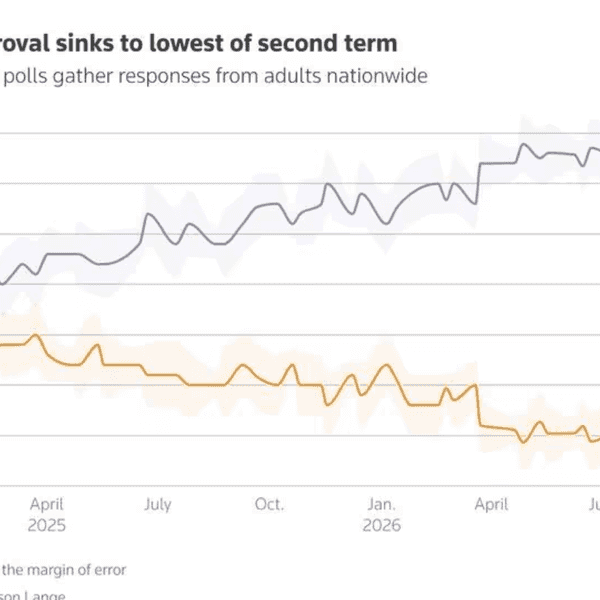
There is also widespread and well-documented disillusionment with the five-term Republican incumbent, Susan Collins, who has shown preternatural survival skills in a generally blue state, but now must contend with slumping approval numbers that suggest she is nearly 20 points underwater. Collins is widely mocked for her repeated expressions of “concern” about Trump administration policies, usually followed by votes that favor his policies and preferences.
Many women voters in Maine are still smarting from the deciding vote she cast to confirm Brett Kavanaugh to the Supreme Court. Collins has acknowledged she was swayed by a memo from Ladies for Kavanaugh, an organization founded, ironically, by Platner’s former girlfriend Lyndsey Fifield. The memo notably discredited the testimony of Christine Blasey Ford, who had accused Kavanaugh of sexually abusing her as a teenager. “Susan Collins told me that without that memo she could not have seen how to support him,” said Heather R. Higgins, chair of the right-wing Independent Women’s Forum, where Fifield is now a fellow.
As the Jewish Telegraphic Agency (JTA) noted, the issue of Israel “loom[ed] large” in the Maine primary, even though the state’s Jewish population is only about half the national average. Platner has fiercely condemned what he calls Israel’s “genocide” in Gaza, vowed never to take money from the American Israel Public Affairs Committee (AIPAC), and charged that “Susan Collins is bought and paid for by Benjamin Netanyahu, and she votes accordingly.” (Campaign finance numbers show that AIPAC “bundlers” account for 20 percent of donations to Collins in the most recent funding cycle. And of the 97 out-of-state billionaire donors to her campaign, two of the biggest – Stephen Schwarzman, CEO of Blackstone Inc. and Robert Kraft, owner of the New England Patriots -- are also seven-figure donors to AIPAC Super PACs.)
The JTA also noted reporting from other media that Katie Glueck, co-author of the seminal Times piece, had received an AIPAC Activist of the Year award while co-president of Students for Israel at Northwestern University in 2009, leading to questions of whether this prior history of activism may have created the appearance of bias in her reporting.
It’s important to note that while there has been an intense focus on AIPAC’s role in Maine and other primaries, with rising anti-Semitism one undeniable factor, there are also indications that many voters see its influence not as a problem unique to AIPAC, but as another manifestation of the influence on both parties of multiple powerful donors and lobbyists such as cryptocurrency interests, private equity, and tech billionaires.
In light of all these controversies, and the volume of information available to voters, it seemed worthwhile to take stock of the polling numbers from the Maine Democratic primary. Turnout was off the charts – 44 percent higher than in the last competitive off-year primary, in 2018, and 37 percent higher than in the 2020 presidential primary. And Platner’s margin of victory was strikingly consistent across every demographic group in this economically and socially diverse state. Janet Mills won just three fly-speck rural settlements, by an aggregate vote of 8-4.
For Platner And Other Veteran Candidates, The Midterms Are Looming
With the midterms now just four months away, the Democratic Party continues to struggle – often in ugly, mudslinging primaries – over which coherent national identity to project: Should they field moderate candidates to appeal to swing voters, or progressives like Platner to motivate voters hungry for economic equity and generational change? But as the idiosyncrasies of Maine suggest, it’s likely a false choice. As the party struggles with its national brand, the reality is that every race is local. Affordability may be a generic buzzword for all candidates, but it means something different in each place, and that matters especially for all the veterans running in the most winnable states and districts.
In the woods of rural Maine, it may be the devastating impact of tariffs on the price of a chainsaw. In agricultural Nebraska, it’s the soaring cost of fertilizer and diesel resulting from the closure of the Strait of Hormuz and the collapse of soybean prices because of Trump’s trade wars. In New Jersey’s suburban Seventh District, it’s sky-high utility bills. In Arizona’s Sixth District, it’s the anxieties of the high proportion of low-income Latino voters, many of whom voted for Trump but now must struggle with the combined impact of inflation and ICE raids. In each of these winnable contests, veterans are running to unseat Republican incumbents, and in character, military experience, and position on the political spectrum, they could hardly be more diverse.
As the Brits like to say, it’s horses for courses – you run a different kind of racehorse to suit the particular conditions of every track.
George Black, author of The Long Reckoning: A Story of War, Peace, and Redemption in Vietnam, is a frequent contributor to The Washington Spectator, from which this article is reprinted with permission. Additional research by Anne Nelson.